
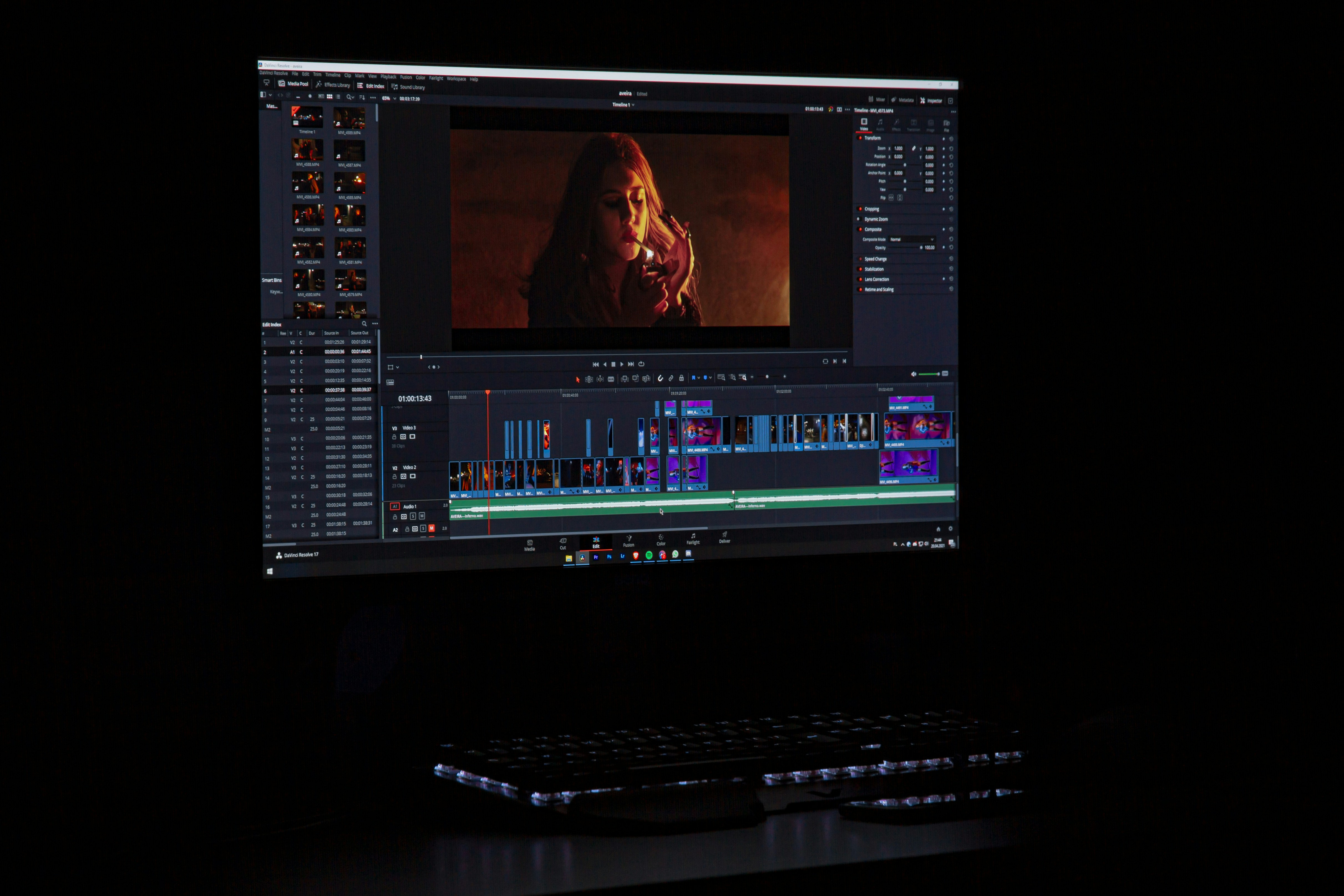
Introduction to AI in Video Editing
The integration of artificial intelligence (AI) into the video editing industry marks a significant transformation in the way content is produced and edited. Traditionally, video editing has been a labor-intensive and time-consuming task that required a high level of technical skill and experience. However, with the advent of AI technology, the editing landscape is evolving rapidly, providing creators with tools that streamline the process and enhance overall productivity.
AI-driven video editing tools leverage sophisticated algorithms to automate various editing processes. These tools can analyze footage, identify key scenes, and suggest edits, enabling editors to focus on creative decision-making rather than tedious tasks. This not only speeds up the editing workflow but also democratizes video production, making it more accessible to novice editors and content creators.
One of the remarkable capabilities of AI in video editing is its potential for real-time editing assistance. Advanced AI systems can evaluate the content being edited, provide instant feedback, and even generate compelling content suggestions. This interactive support allows editors to experiment with different styles and approaches, leading to innovative results that were previously time-prohibitive.
Additionally, AI technologies are instrumental in enhancing video quality through features like automated color correction, image stabilization, and sound enhancement. These functionalities empower creators to produce professional-quality videos without needing advanced editing expertise. As a result, the barriers to entry in video editing are lowered significantly, enabling a broader audience to engage in video content creation.
This ongoing evolution in the video editing industry signifies a trend where AI will continue to play an increasingly critical role. With each advancement, the capabilities of AI tools will inevitably redefine the standards of video production, pushing the boundaries of creativity and efficiency. As we look toward 2026, the expectation is that AI will not only support but also inspire editors, leading to an exciting future for video editing.
Key Features of AI Video Editing Tools
AI-powered video editing tools have transformed the landscape of digital content creation, introducing a plethora of features that significantly enhance the editing process. One of the most remarkable functionalities is automated editing, which streamlines the post-production workflow. With advanced algorithms, these tools can analyze video footage, select the best clips, and compile them into a cohesive narrative with minimal user input. This automation not only saves time but also lowers the barriers for those new to video editing.
Another essential feature is scene detection. AI-driven software can intelligently identify transitions, changes in scenery, or notable events within the footage. This capability allows editors to navigate through the video with greater efficiency, focusing on critical segments rather than manually reviewing each frame. Scene detection enhances the editing experience by ensuring the final product is engaging and well-paced.
Additionally, many AI video editing tools come equipped with pre-set templates, catering to various styles and genres. These templates enable users to create professional-quality videos without extensive design skills. By simply selecting a template that fits their vision, users can achieve polished results that align with their brand or personal preferences. Furthermore, the availability of customizable assets, such as graphics and animations, complements these templates, providing a flexible foundation for creativity.
Incorporating AI into video editing software not only augments the practical aspects of creating content but also enriches the creative process. Users are empowered to experiment with different styles and techniques, pushing the boundaries of their artistic expression. As technology continues to evolve, the prominence of these features will likely grow, paving the way for even more innovative solutions in video editing.
Top AI Tools for Beginners
As video content continues to dominate the digital landscape, beginners seeking to enter video editing will benefit from the plethora of AI-powered tools available in 2026. These tools are designed with user-friendliness in mind, enabling novice editors to explore their creativity without being overwhelmed by complex interfaces.
One standout option is Magisto, which leverages AI to automate the editing process. This tool allows users to upload raw footage and select themes, music, and effects that suit their vision. Magisto’s intuitive interface and guided features make it particularly appealing for those who are just starting out. With built-in tutorials, users can quickly learn the essentials of video editing while producing polished results.
Another notable AI tool is Adobe Premiere Rush. This software combines the powerful features of Adobe Premiere Pro with an accessible platform designed specifically for beginners. With a simplified interface, users can easily drag and drop media into their projects, incorporate templates, and add soundtracks. Adobe also provides a wealth of online resources, including video tutorials, to help users grasp advanced concepts over time.
InVideo is another excellent choice for new video editors. This AI-driven tool offers an extensive library of templates and an easy-to-use interface that allows users to create engaging videos in minutes. Additionally, InVideo provides comprehensive educational resources, including video classes and articles, catering specifically to those who may be unfamiliar with general video editing practices.
For those who prefer mobile editing, Kinemaster is a highly-rated app that features a user-friendly layout and powerful editing capabilities. Kinemaster’s layered interface allows beginners to experiment with multi-track audio and video adjustments while offering a variety of effects and transitions. Moreover, detailed tutorials are readily available to facilitate the learning curve.
As technology continues to evolve, these user-friendly AI video editing tools are making the creative process accessible to everyone. By offering supportive resources and intuitive designs, they serve as invaluable assets for beginners eager to tell their stories through video.
Advanced AI Tools for Professionals
The landscape of video editing has shifted dramatically with the introduction of advanced AI tools tailored specifically for professional videographers and filmmakers. These sophisticated applications not only streamline the video production process but also elevate the quality of the final product. One of the defining features of these tools is their ability to harness machine learning algorithms, which facilitate complex tasks such as automatic scene detection, color grading, and audio synchronization.
For instance, tools like Adobe Premiere Pro’s Sensei leverage AI to offer smart suggestions and automate tedious tasks, allowing professionals to focus more on creative aspects. This level of automation not only saves time but also ensures consistency across projects, making it easier for professionals to maintain a high standard. Furthermore, the customization options available in these advanced AI tools allow users to tailor workflows according to their specific needs, providing a unique balance between automation and manual input.
Additionally, features like object tracking and facial recognition enhance the storytelling aspect of video editing. These capabilities enable filmmakers to create more engaging narratives by seamlessly incorporating special effects and animations that accentuate key elements within their footage. Moreover, the integration of cloud-based services in many of these tools allows for collaborative editing, where teams can work together in real-time regardless of their geographical locations, thus enhancing the creative process.
The adaptability of these AI-driven video editing tools can significantly reduce the learning curve for new users, allowing them to harness professional-level features without the need for extensive training. As these tools continue to evolve with advancements in AI technology, they are likely to become indispensable assets in high-end video production workflows, equipping professionals with the resources necessary to create compelling visual stories efficiently.
Comparison of Features and Pricing
As the landscape of video editing continues to evolve, the emergence of AI-driven tools has substantially transformed the way content creators approach this task. In 2026, several leading AI video editing tools stand out due to their innovative features, user experiences, and varied pricing tiers, catering to a diverse range of users from amateurs to professionals.
One prominent tool is AI Edit Pro, which offers an intuitive interface enhanced by AI capabilities such as scene recognition and automated audio adjustments. Users appreciate the tool’s ability to streamline the editing process, allowing for quick edits and high-quality outputs. Pricing for AI Edit Pro is competitive, with subscriptions starting at $19.99 per month, making it accessible for individual creators.
Another player in this market is ClipMaster AI, which focuses on collaboration features, making it ideal for teams. Its advanced AI algorithms not only simplify the editing process but also optimize video content for various platforms. The collaborative interface allows multiple users to work simultaneously, and pricing begins at $29.99 per month for teams, reflecting its additional features.
For those seeking cost-effective solutions, EasyEdit AI offers a freemium model, which provides basic editing functionalities free of charge while premium features are available via an affordable subscription of $9.99 per month. This tool is especially well-regarded among beginners due to its simplicity and ease of use.
Lastly, ProVideo AI caters to professionals with extensive features such as color grading and advanced motion tracking powered by AI. Its pricing, however, reflects its target audience, with plans starting at $49.99 per month. This higher cost is justified by its comprehensive set of tools designed for filmmaker-level projects.
In analyzing these tools, users must consider their individual needs, budget constraints, and the specific features that would enhance their editing experience. By evaluating tools like AI Edit Pro, ClipMaster AI, EasyEdit AI, and ProVideo AI, content creators can select a solution that aligns with their goals in the competitive realm of video editing.
User Reviews and Testimonials
The landscape of video editing is undergoing significant transformation, thanks to the rise of artificial intelligence (AI) tools. Enthusiasts and professionals alike are increasingly reliant on these innovative solutions, and user feedback provides valuable insights into their effectiveness and usability.
Many users express enthusiasm about the time-saving capabilities of AI video editing tools. For instance, one user stated, “Using AI software allowed me to finish my project in half the time I normally would have. The automated cutting and smart transitions really sped up my workflow.” This speed is especially crucial in a fast-paced digital environment where time is equated with satisfaction and productivity.
Another frequent piece of feedback revolves around the ease of use. A novice video editor shared, “I was intimidated at first, but the AI tool’s intuitive interface guided me through the entire editing process. I was able to create high-quality content without any prior experience. This accessibility opens doors for many aspiring creators who might otherwise hesitate to dive into video production.”
However, not all testimonials are overwhelmingly positive. Some users have reported facing challenges with the AI’s decision-making. For example, one professional editor cautioned, “While AI helps immensely with cutting and sequencing, I sometimes find that the tool doesn’t fully understand my vision. It misses the subtleties of storytelling that only a human can capture, which can lead to frustrating edits that require additional tweaking.”
Furthermore, concerns about creativity and originality have been voiced. A content creator mentioned, “I love the convenience of AI tools, but I worry that over-reliance on automation could lead to a homogenization of style in video editing. It’s important to find a balance between leveraging technology and maintaining a unique artistic voice.”
Despite these reservations, the overarching sentiment remains positive. Most users appreciate the blend of efficiency and creativity that AI tools offer, allowing them to focus more on the creative aspects of video production while handling more technical tasks with ease. The journey of integrating AI video editing tools is still evolving, and with it, user experiences continue to shape the future of this craft.
Future Trends in AI Video Editing
The landscape of video editing is poised for remarkable transformations as advancements in artificial intelligence continue to unfold. By 2026, we anticipate that AI tools will become integral to the video production and editing processes, enhancing both efficiency and creative capabilities. One significant trend is the rise of AI-powered automation in tasks traditionally performed by human editors. This includes automated scene detection, color correction, and even audio enhancement. Such developments will enable editors to focus more on storytelling and artistic expression rather than on repetitive technical tasks.
Moreover, we foresee the emergence of more sophisticated AI algorithms capable of generating entirely new video content. This may involve the use of deep learning techniques, where AI systems analyze vast datasets of existing videos to learn how to create scenes that resonate emotionally or fit specific themes. As these technologies evolve, the boundaries of video editing will expand, offering creators unprecedented flexibility and options.
Another trend likely to shape the future of AI video editing is the integration of real-time collaboration tools within editing software. Future applications may leverage AI to allow multiple users to edit and view projects simultaneously, regardless of location. This could facilitate a more dynamic creative process, enabling collaborative input and immediate feedback on edits, ultimately leading to more polished final products.
Furthermore, we can expect increased personalization in video content. With AI, editing tools will analyze audience preferences and engagement metrics to suggest edits or create tailored video versions. This level of customization will not only enhance viewer satisfaction but also optimize marketing efforts for different demographics.
In summary, the advancements in AI technology are set to redefine video editing in several ways, from automating mundane tasks to creating entirely new opportunities for collaboration and personalization. As we approach 2026, it will be intriguing to observe how these trends unfold and the implications they carry for video creators and audiences alike.
Integration with Other Technologies
The evolution of artificial intelligence (AI) in video editing does not occur in isolation; rather, it is significantly enhanced through integration with other technologies such as virtual reality (VR), augmented reality (AR), and online collaboration platforms. Each of these integrations facilitates novel workflows and enriches the content creation experience for users.
AI video editing tools have begun to merge seamlessly with VR and AR technologies, allowing creatives to explore immersive environments and interactive narratives. For instance, filmmakers can leverage AI to edit footage captured in 360-degree formats, enabling the production of engaging VR content. This integration allows for intricate edits to be made on interactive sequences, enriching the viewer’s experience while also reducing the time spent on tedious editing tasks. AI algorithms can analyze footage to suggest optimal angles or adjustments, making the creative process smoother.
Furthermore, online collaboration platforms are increasingly embracing AI-driven video editing solutions. These tools enable remote teams to work together in real time, regardless of their physical locations. Integrations with cloud services allow multiple users to access and manipulate video projects simultaneously, enhancing productivity. AI can assist by automatically organizing content based on user preferences or past edits, making it easier to retrieve the necessary clips for a project. This synergy between AI tools and collaborative platforms fosters innovation and accelerates the content development cycle.
In summary, the integration of AI video editing tools with VR and AR technologies, as well as online collaboration platforms, offers remarkable benefits to content creators. It not only enhances creativity but also streamlines workflows, making the editing process more efficient. As these technologies continue to evolve, the possibilities for enhancing video content will expand, paving the way for more innovative storytelling methods.
Conclusion: The Impact of AI on Video Production
As we reflect on the evolution of video editing, it becomes increasingly clear that Artificial Intelligence (AI) tools are transforming the landscape in profound ways. From automation to intelligent editing choices, these advancements are not just enhancing productivity; they are redefining the creative process for both amateur enthusiasts and seasoned professionals. Embracing AI technology is essential for anyone wishing to stay relevant in this rapidly advancing industry.
The significant impact of AI on video production is multifaceted. For instance, AI-driven software can analyze footage more rapidly than a human editor, identifying crucial elements that require attention. This capability not only accelerates the editing process but also allows creatives to focus more on storytelling rather than the mundane tasks often associated with editing. Furthermore, features such as automatic color correction and sound synchronization showcase how AI can enhance the overall quality of the final product with minimal human intervention.
For both novices and experienced filmmakers, the importance of integrating AI tools into their workflows cannot be overstated. The accessibility of these technologies means that even those with limited technical skills can produce high-quality videos. In addition, the competitive nature of the film and video industry necessitates that creators adapt to new technologies to maintain an edge over their competitors. By leveraging AI tools, filmmakers can not only improve their efficiency but also experiment with innovative editing techniques that were previously unfeasible.
In conclusion, the advent of AI tools in video editing represents a pivotal shift in how video content is created and produced. As these technologies continue to evolve, their influence on video production will only grow, making it imperative for professionals and amateurs alike to embrace these advancements. Staying ahead in the industry means recognizing the potential of AI in reshaping the future of video production.